Choosing a skid plate for your KTM, Husqvarna, or GasGas is really a choice between three materials: plastic (UHMW or HDPE), aluminum, and carbon fiber. Each one protects your engine cases and frame rails, but they feel completely different on the trail — in weight, in sound, in how they slide over rocks, and in what they cost. This guide breaks down all three so you can match the right skid plate to the way you actually ride.
Why skid plate material matters
Your skid plate is the single part of the bike taking direct hits from rocks, roots, logs, and stumps. The material determines four things you’ll notice on every ride: how much it weighs, how quietly it runs, how well it slides (rather than catches) on obstacles, and how it behaves after a hard impact – does it flex and recover, dent, or crack? There’s no single “best” material. A hard-enduro racer sliding over granite ledges wants something very different from a desert rider pounding whoops. Here’s how the three stack up.
UHMW and HDPE: the plastic skid plates
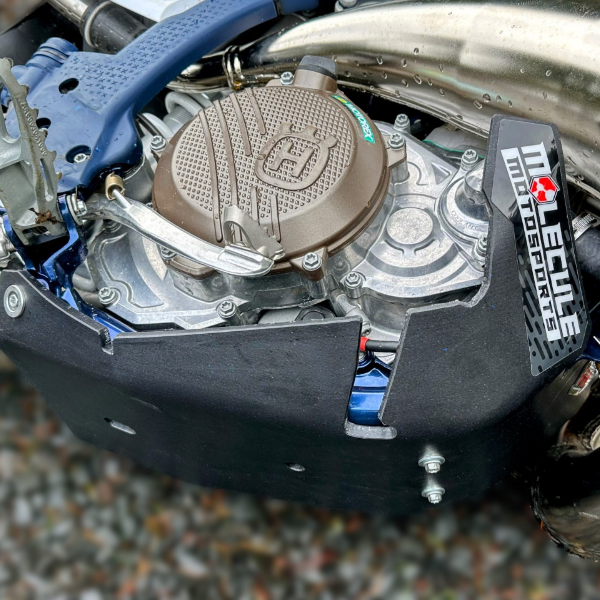
Plastic skid plates are the most popular choice for technical trail and enduro riding, and for good reason. Both UHMW (ultra-high molecular weight polyethylene) and HDPE (high-density polyethylene) are slick, tough plastics that let the bike glide over obstacles instead of hanging up on them. They’re also the quietest option — where an aluminum plate rings like a bell every time it clips a rock, plastic just thuds and keeps moving.
Strengths
- Self-lubricating and slick — the material slides over rocks and logs rather than grabbing, which keeps your momentum up in the technical stuff.
- Quiet — dramatically less noise than aluminum, and it doesn’t transmit vibration into the frame.
- Impact absorbing — plastic flexes and returns to shape instead of denting or cracking. It won’t warp or bend under a hard hit.
- Lighter than aluminum — HDPE runs roughly 30–40% lighter than a comparable aluminum plate.
Trade-offs
Plastic plates are thicker than aluminum or carbon to achieve the same protection, so they add a little bulk. Over many seasons of hard use the surface will gouge and wear, though it takes a lot of abuse to wear through a quality plate.
Plastic skid plates at Slavens Racing
Molecule Motosports thermoforms its plates from 1/4″ Billet UHMW, which is up to 15 times more abrasion-resistant than carbon steel and self-lubricates to slide over obstacles. Their shape is designed to shed mud, and they’re offered in a Standard version and a heavier-duty “OverBilt” version for extreme rock. AXP Racing uses 6mm and 8mm HDPE with custom-molded fitment per model, and many of their plates integrate a linkage guard for full underbelly coverage.
Aluminum: the heavy-duty workhorse
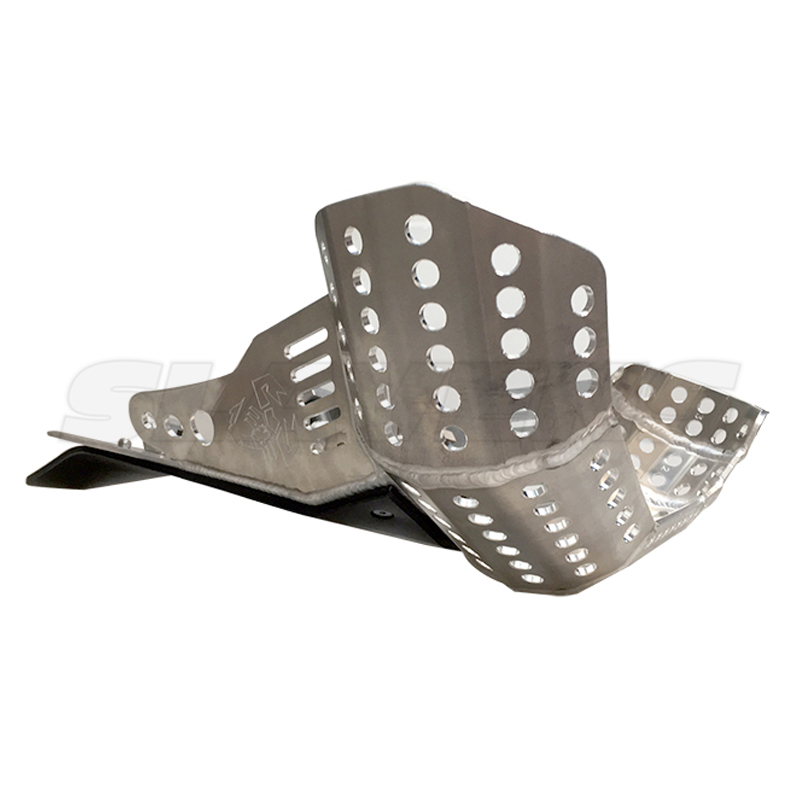
Aluminum is the traditional heavy-duty choice and still the go-to for riders who prioritize maximum, take-anything protection. A quality aluminum plate shrugs off impacts that would gouge plastic, and it’s the material most riders picture when they think “bash plate.”
Strengths
- Maximum durability — handles repeated hard impacts and sharp-edged rocks without a second thought.
- Thin profile — protects with less bulk than plastic, keeping ground clearance high.
- Serviceable — better plates include drain holes so you can change oil without pulling the plate, plus vents to shed mud.
Trade-offs
Aluminum is the loudest option and transmits more vibration into the frame — which is why the best kits ship with foam tape and open-cell foam to quiet things down and prevent debris buildup against the cases. It’s also heavier than plastic, and a severe enough hit can dent rather than flex back.
Aluminum skid plates at Slavens Racing
Enduro Engineering builds bolt-on plates from 3/16″ 5052 aluminum with side tabs that protect the frame rails and footpeg mounts, vents in the wings for airflow and mud clearing, and oil-drain holes. Many models add an ultra-slick flexible plastic linkage guard that glides over debris. Emperor Racing hand-TIG-welds its heavy-duty plates from 3/16″ aviation-grade aluminum and includes foam tape and open-cell foam to eliminate vibration and material buildup – a genuinely burly plate for rocky, abusive terrain.
Carbon fiber: the lightweight premium option
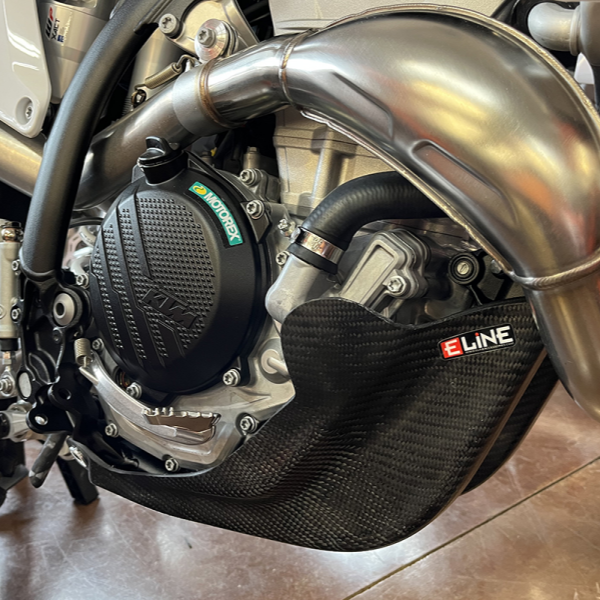
Carbon fiber is the premium, weight-obsessed choice – the lightest way to protect the bottom of your bike while looking factory-race the whole time. For racers counting grams and riders who want the trickest possible setup, carbon is hard to beat.
Strengths
- Lightest option — meaningfully lighter than aluminum, which you feel most in tight, technical riding.
- Slick and rigid — a smooth, flowing surface that slides over obstacles while staying stiff.
- Race-proven and clean-looking — hand-molded for a factory-style fit with a high-end finish.
Trade-offs
Carbon carries the highest price tag of the three. Quality modern plates are surprisingly impact-tough thanks to composite and Kevlar layups, but it remains the most premium purchase on the list.
Carbon fiber skid plates at Slavens Racing
P3 builds seamless carbon plates using high-impact composites and a high-strength epoxy finish, with model-specific fitment and hybrid options for added toughness. E Line Accessories incorporates Kevlar into its hand-molded carbon plates for durability at a low weight, with full coverage of the engine cases, frame rails, and linkage — purpose-built for GNCC, hard enduro, and technical trail.
Quick comparison
| Material | Weight | Noise | Impact behavior | Best for | Brands at Slavens |
|---|---|---|---|---|---|
| UHMW / HDPE (plastic) | Light | Quietest | Flexes & recovers, slides | Technical trail & enduro | Molecule Motosports, AXP Racing |
| Aluminum | Heaviest | Loudest | Max durability, can dent | Hard/abusive rock, all-around | Enduro Engineering, Emperor Racing |
| Carbon fiber | Lightest | Moderate | Stiff, tough composite | Racing & weight savings | P3, E Line Accessories |
Which skid plate is right for you?
If you ride tight, technical trail and enduro where sliding over rocks and logs matters most — and you value a quiet bike — go plastic (UHMW or HDPE). If you punish your bike in sharp, rocky terrain and want the most bulletproof protection regardless of a little extra weight and noise, aluminum is the workhorse. And if you’re racing or simply want the lightest, trickest setup and don’t mind paying for it, carbon fiber is the premium pick.
Still deciding? Start with our complete guide to dirt bike skid plates, or browse the full lineup of skid plates for your KTM, Husqvarna, or GasGas at Slavens Racing.